The Art of Crafting Data: Generating Specific Statistical Distributions for Controlled Creation
Imagine you're an architect tasked with designing a new building, but instead of bricks and steel, your materials are numbers. You don't just throw data points together randomly; you carefully select and shape them, ensuring they fit a precise blueprint. This is the essence of generating specific statistical distributions: creating artificial data that mirrors the patterns and behaviors found in the real world, or adheres to a predefined structure for testing and simulation.
Whether you're simulating user behavior, stress-testing algorithms, or designing A/B experiments with predictable outcomes, the ability to generate data with exact statistical properties is an invaluable skill. It allows you to build controlled environments, understand system responses, and even fill gaps where real-world data is scarce or sensitive.
At a Glance: Your Guide to Data Generation
- Uniform Distribution: Perfect for scenarios where every outcome within a range is equally likely. Think rolling a fair die or picking a number blindly.
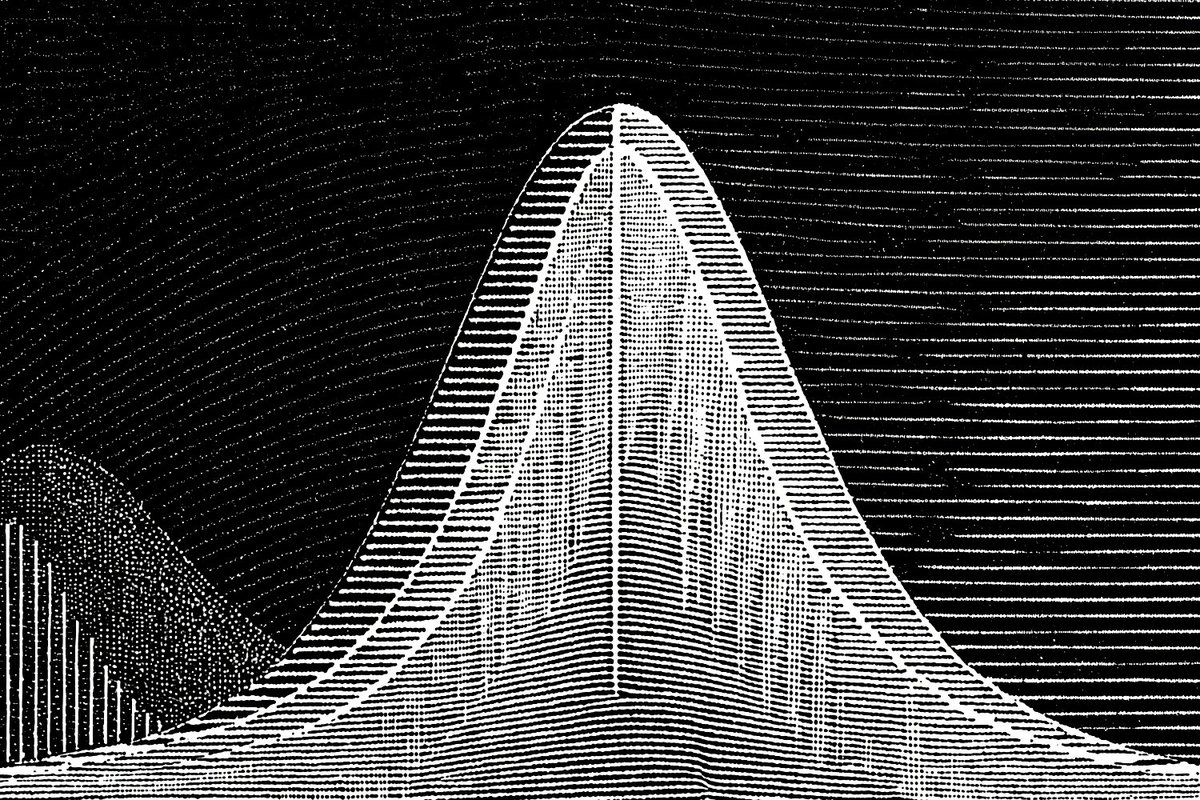
- Normal Distribution: The ubiquitous "bell curve," ideal for phenomena clustering around an average, like human heights or test scores.
- The Power of Control: These distributions give you precise levers (mean, standard deviation, range) to define your synthetic data.
- Beyond the Basics: Simple distributions are foundational but struggle with complex, interdependent real-world data patterns.
- Replicating Reality: Matching complex existing distributions requires more advanced techniques than basic fitting functions.
Why Not Just Use Real Data? The Case for Synthetic Data
Real data is messy, often incomplete, and comes with privacy concerns. Moreover, when you're developing a new system, you often don't have real data yet, or you need to simulate conditions that haven't occurred. This is where synthetic data, specifically generated from statistical distributions, shines.
It offers a sandbox for innovation, allowing you to:
- Prototype and Test: Build and validate models before touching live data.
- Augment Small Datasets: Create more training examples when real data is limited.
- Preserve Privacy: Share synthetic datasets that statistically resemble real data without exposing sensitive information.
- Stress Test: Simulate edge cases and extreme conditions that are rare in actual data.
- A/B Test Design: Set up experiments with guaranteed uplifts or specific baseline behaviors.
The goal isn't always to perfectly mimic every nuance of reality, but to create a statistically representative — or intentionally skewed — version of it.
The Fundamental Building Blocks: Uniform and Normal Distributions
At the heart of most data generation lie two foundational statistical distributions. Understanding them is crucial, as they serve as the building blocks for more complex data structures.
1. The Uniform Distribution: Fair Play in Numbers
Imagine a game where every player has an equal chance of winning. That's the uniform distribution in a nutshell.
- What it Is: This distribution dictates that every possible value within a defined range (let's say from a minimum 'a' to a maximum 'b') has an identical probability of being selected. There are no "favorite" numbers; everything in between 'a' and 'b' is equally likely.
- How it Works: When you draw numbers from a uniform distribution, the system randomly selects values within your specified bounds. If you were to plot enough of these numbers on a histogram, you'd see bars of roughly equal height, forming a flat rectangle.
- When to Use It:
- Random Initialization: Setting initial weights in a neural network.
- Simulating Unbiased Events: Rolling a fair die (1-6 integers), or picking a random percentage (0-100%).
- Baseline Scenarios: Creating a neutral baseline for comparison in simulations, where no particular outcome is favored.
- Practical Example: You might use a uniform distribution to simulate customer satisfaction scores if you believe all scores from 1 to 5 are equally probable for a new product with no established feedback. Or, you could model the percentage completion of a task, assuming progress happens in an undifferentiated manner between 0% and 100%.
2. The Normal Distribution: The Bell Curve of Reality
The normal distribution, also known as the Gaussian distribution or simply the "bell curve," is perhaps the most common and recognizable pattern in natural phenomena.
- What it Is: Values tend to cluster around a central average, with extreme values becoming progressively rarer as you move away from that average. Think of a bell shape, high in the middle and tapering off at the edges.
- Key Parameters: Your Control Levers
- Mean (μ): This is the heart of your distribution, representing the central value or peak of the bell curve. Most generated numbers will fall close to the mean.
- Standard Deviation (σ): This critical parameter measures the spread or dispersion of your data.
- A small
σmeans data points are tightly packed around the mean, resulting in a tall, narrow bell curve. - A large
σmeans data points are more spread out, creating a flatter, wider bell curve. - (For the statistically curious,
σ²represents the variance, which is simply the standard deviation squared.) - How it Works: The generation mechanism is designed to produce numbers that are most probable near the
μ. As you move further from the mean in either direction, the probability of generating a number decreases exponentially, forming that distinctive bell shape. - When to Use It:
- Modeling Natural Phenomena: Heights of adult humans, blood pressure readings, measurement errors in experiments.
- Standardized Scores: Simulating standardized test scores (e.g., IQ tests with a mean of 100 and a standard deviation of 15).
- Errors and Noise: Adding realistic noise to clean datasets.
- Practical Example: If you're simulating the heights of adult males, you'd choose a mean (e.g., 175 cm) and a standard deviation (e.g., 7 cm). The generated data would mostly fall around 175 cm, with fewer individuals at 160 cm or 190 cm, accurately reflecting population statistics.
The Power and the Pitfalls: Benefits and Limitations of Distribution-Based Generation
Using these fundamental distributions offers compelling advantages, but it's equally important to understand their boundaries.
The Upside: Why These Distributions Are So Useful
- Ease of Use & Accessibility: Generating numbers from uniform or normal distributions is computationally simple. Nearly every programming language and statistical library offers robust, optimized functions for this purpose. Python's NumPy library, for instance, provides straightforward commands like
numpy.random.uniform()andnumpy.random.normal(), making it incredibly easy to generate random numbers in Python with specific characteristics. - Precise Control: You have direct control over the core characteristics of your data. Want a wider spread? Adjust the standard deviation. Need a different average? Change the mean. This allows for highly targeted data creation.
- Interpretability: The parameters you use (min/max for uniform, mean/standard deviation for normal) have clear, intuitive meanings. This makes it easy to understand what your synthetic data represents.
- Foundational Building Blocks: These distributions are often the starting point for more complex data generation techniques. They provide a predictable, well-understood basis upon which you can add layers of complexity.
The Downside: Where Simple Distributions Fall Short
While powerful, generating data solely from individual, independent distributions has significant limitations, especially when dealing with complex, real-world datasets:
- Ignoring Interdependencies: Real data is rarely a collection of isolated variables. Age often correlates with income, education level with job satisfaction, and so on. Simple uniform or normal distributions generate each feature independently, completely missing these crucial relationships.
- Lack of Realism for Complex Tabular Data: Imagine a dataset with features like 'age', 'income', 'education level', and 'location'. If you generate each of these independently from its own distribution, you might end up with illogical combinations (e.g., a 10-year-old with a six-figure income and a PhD). These methods can't capture the subtle, often non-linear, interactions that define actual data.
- Difficulty Replicating Non-Standard Distributions: Many real-world metrics don't conform neatly to a uniform or normal curve. They might be skewed, multimodal (have multiple peaks), or have heavy tails (more extreme values than a normal distribution would predict). This leads us to a significant challenge.
The Real-World Conundrum: When Simple Fitting Isn't Enough
Here's where things get interesting and often frustrating for data practitioners. What happens when your existing, real-world data doesn't fit a neat uniform or normal pattern, but you need to generate synthetic data that precisely replicates its unique, complex distribution?
Consider a scenario highlighted by users struggling with real-world applications: you have 900,000 user metrics—perhaps conversion rates, session durations, or engagement scores—and you need to generate synthetic data for A/B testing. Crucially, you need this synthetic data to accurately repeat the existing, complex distribution of your real metrics, especially for values in a specific range (e.g., 0-100 units). You might also need to introduce a "guaranteed uplift" in a new synthetic group, meaning the synthetic data for your 'B' group needs to have a slightly shifted or enhanced distribution compared to your 'A' group, which matches the original.
The core problem? Standard statistical package fit methods often fall short. They might fit a basic curve (like a Normal or a Gamma distribution) to your data, but they often fail to capture the subtle nuances, localized peaks, and specific tail behaviors of a truly complex, empirical distribution. The user might want the bulk of the distribution (e.g., 0-100) to be perfectly matched, while allowing the "tail" (values beyond 100, if any) to be more randomly generated. This level of precision and control is beyond what simple parametric fitting can offer.
This isn't about creating a new distribution from scratch; it's about cloning an existing one.
Strategies for Replicating and Shaping Complex Distributions
When uniform and normal distributions are too simplistic, you need a more sophisticated toolkit to match or modify empirical distributions.
1. Empirical Cumulative Distribution Function (ECDF) and Inverse Transform Sampling
This is arguably the most robust method for perfectly replicating any one-dimensional distribution observed in your data.
- The Idea: Every dataset implicitly defines an Empirical Cumulative Distribution Function (ECDF). This function tells you, for any given value
x, what proportion of your data is less than or equal tox. - How it Works:
- Construct the ECDF: From your real data, create a step function representing its ECDF. You essentially sort your data and plot each data point against its cumulative probability.
- Generate Uniform Random Numbers: Draw random numbers from a standard uniform distribution (0 to 1).
- Inverse Transform: For each uniform random number, find the corresponding value on your ECDF. Conceptually, you're "looking up" the value
xthat has a cumulative probability equal to your random number.
- Benefits: It perfectly matches the shape, skewness, and tails of your original distribution. It's non-parametric, meaning it makes no assumptions about the underlying distribution. This is ideal for that 0-100 range replication problem.
- Implementation Note: In Python, you can use
numpy.interpwithnp.random.randon your sorted data, or more advanced libraries likescipy.stats.rv_discrete(for discrete data) or custom interpolation for continuous data.
2. Kernel Density Estimation (KDE)
KDE is a powerful tool for estimating the probability density function (PDF) of a random variable, essentially "smoothing out" a histogram to create a continuous curve.
- The Idea: Instead of discrete bins like a histogram, KDE places a "kernel" (a small, smooth bump, often a Gaussian) over each data point and sums them up to estimate the overall density.
- How it Works:
- Estimate PDF: Use your existing data to compute a KDE. This gives you a continuous, smoothed representation of your data's distribution.
- Sample from KDE: You can then sample new data points from this estimated density function.
- Benefits: Can capture complex, multimodal distributions that simple parametric models miss. It produces a smooth, continuous distribution.
- Limitations: The quality depends on the "bandwidth" parameter (how wide the kernels are), which can be tricky to tune. It's an approximation, not an exact replication like ECDF.
- Use Case: When you need a smooth, continuous representation of a complex distribution, especially if you want to sample between existing data points, and don't require absolute exactness.
3. Mixture Models
Sometimes, a complex distribution isn't a single entity but a combination of several simpler ones.
- The Idea: A mixture model assumes your data comes from a blend of different underlying distributions (e.g., two or three normal distributions with different means and standard deviations).
- How it Works:
- Fit Mixture Model: Use algorithms (like Expectation-Maximization for Gaussian Mixture Models) to identify the parameters of the component distributions and their respective weights in the mixture.
- Generate Data: To generate a new point, first randomly choose one of the component distributions based on its weight, then draw a sample from that chosen component.
- Benefits: Excellent for multimodal distributions where distinct subgroups exist within your data (e.g., heights of a mixed group of men and women, each following a normal distribution).
- Limitations: Requires careful model selection (how many components?) and can be more complex to fit than single distributions.
4. Quantile Mapping / Histogram Matching
Similar in spirit to ECDF, but often discussed in image processing for matching color histograms. In statistics, it refers to transforming data to match the quantiles of another distribution.
- The Idea: If you want to transform a dataset
Aso that its distribution matches a target datasetB, you map the quantiles ofAto the corresponding quantiles ofB. - How it Works:
- For each value in
A, find its percentile rank withinA. - Find the value in
Bthat corresponds to that same percentile rank. This becomes the transformed value forA.
- Benefits: Very effective for matching the shape of a distribution, preserving ranks and relative differences within the original data. It's particularly useful when you have a baseline dataset and want to generate a modified version that maintains the original's rankings but takes on the target distribution's overall shape.
Implementing Specific Distributions in Python (with NumPy)
Let's look at how to generate data using common libraries, focusing on NumPy for its efficiency and widespread use.
Generating Uniform Data
To get numbers between a specified lower bound (low) and upper bound (high):
python
import numpy as np
import matplotlib.pyplot as plt
Parameters for uniform distribution
low_bound = 0
high_bound = 100
num_samples = 10000
Generate uniform data
uniform_data = np.random.uniform(low=low_bound, high=high_bound, size=num_samples)
Visualize
plt.hist(uniform_data, bins=50, density=True, color='skyblue', edgecolor='black')
plt.title(f'Uniform Distribution (low={low_bound}, high={high_bound})')
plt.xlabel('Value')
plt.ylabel('Density')
plt.show()
Generating Normal (Gaussian) Data
To get numbers centered around a mean with a certain standard_deviation:
python
import numpy as np
import matplotlib.pyplot as plt
Parameters for normal distribution
mean_val = 50
std_dev = 15
num_samples = 10000
Generate normal data
normal_data = np.random.normal(loc=mean_val, scale=std_dev, size=num_samples)
Visualize
plt.hist(normal_data, bins=50, density=True, color='lightcoral', edgecolor='black')
plt.title(f'Normal Distribution (Mean={mean_val}, Std Dev={std_dev})')
plt.xlabel('Value')
plt.ylabel('Density')
plt.show()
A Basic Approach to Replicating an Existing Distribution (using ECDF concept)
For the problem of replicating a specific complex distribution, especially within a certain range like 0-100, the ECDF approach is highly effective. Here's a conceptual outline:
python
import numpy as np
import matplotlib.pyplot as plt
from scipy.interpolate import interp1d
1. Assume you have some existing_complex_data
For demonstration, let's create a non-standard, skewed distribution
np.random.seed(42)
existing_complex_data = np.concatenate([
np.random.normal(30, 5, 5000), # A hump around 30
np.random.normal(70, 10, 3000), # Another, wider hump around 70
np.random.exponential(15, 2000) + 90 # A tail-like distribution starting higher
])
existing_complex_data = existing_complex_data[(existing_complex_data >= 0) & (existing_complex_data <= 120)]
existing_complex_data = np.sort(existing_complex_data)
2. Create the ECDF from the existing data
The values (x-axis for ECDF) are the sorted data points
The probabilities (y-axis for ECDF) are their cumulative ranks
probabilities = np.linspace(0, 1, len(existing_complex_data))
Create an inverse ECDF function (quantile function)
This function takes a probability (0-1) and returns the corresponding data value
inverse_ecdf = interp1d(probabilities, existing_complex_data, bounds_error=False, fill_value=(existing_complex_data[0], existing_complex_data[-1]))
3. Generate new samples
num_synthetic_samples = 10000
uniform_random_samples = np.random.rand(num_synthetic_samples) # Generate uniform numbers between 0 and 1
Apply the inverse ECDF to transform uniform samples into the desired distribution
synthetic_data = inverse_ecdf(uniform_random_samples)
4. Optional: Introduce a "guaranteed uplift" for an A/B test scenario
For example, shift the synthetic data slightly upwards, or scale it
uplift_percentage = 0.05 # 5% uplift
synthetic_data_uplifted = synthetic_data * (1 + uplift_percentage)
5. Visualize to compare
plt.figure(figsize=(12, 5))
plt.subplot(1, 2, 1)
plt.hist(existing_complex_data, bins=50, density=True, color='gray', alpha=0.7, edgecolor='black', label='Original Data')
plt.title('Original Complex Distribution')
plt.xlabel('Value')
plt.ylabel('Density')
plt.legend()
plt.subplot(1, 2, 2)
plt.hist(synthetic_data, bins=50, density=True, color='skyblue', alpha=0.7, edgecolor='black', label='Replicated Synthetic Data (Baseline)')
plt.hist(synthetic_data_uplifted, bins=50, density=True, color='lightcoral', alpha=0.7, edgecolor='black', label=f'Synthetic Data with {uplift_percentage*100}% Uplift')
plt.title('Replicated & Uplifted Synthetic Distributions')
plt.xlabel('Value')
plt.ylabel('Density')
plt.legend()
plt.tight_layout()
plt.show()
This Python snippet demonstrates how you can effectively clone a given distribution and even introduce controlled modifications, which is crucial for A/B testing scenarios where you need a baseline and an experimental group with a specific, guaranteed difference.
Beyond Single Features: Dealing with Dependent Data
The examples above focus on generating single, independent features. But what if 'income' is correlated with 'age'? Simply generating each from its own distribution won't preserve this critical relationship.
For data with complex, multivariate dependencies, you need to move beyond simple distribution sampling:
- Multivariate Normal Distribution: If your features are jointly normally distributed, you can specify a mean vector and a covariance matrix to generate correlated data.
- Copulas: These mathematical functions allow you to model the dependence structure between random variables separately from their individual marginal distributions. You can generate data with any marginal distributions (e.g., exponential for one variable, log-normal for another) and then impose a specific correlation structure between them.
- Generative Models (e.g., GANs, VAEs): For truly complex, high-dimensional tabular or image data, generative adversarial networks (GANs) or variational autoencoders (VAEs) can learn the underlying structure and dependencies of your data from scratch. These are at the cutting edge of synthetic data generation.
The choice depends on the complexity of your data and the level of realism required. Starting with simple distributions and incrementally adding complexity is often the best approach.
Common Pitfalls and Best Practices
Generating synthetic data is powerful, but it's not without its challenges.
Pitfalls to Avoid:
- Over-reliance on Simple Distributions: Don't assume all your real-world metrics will fit a neat normal curve. Always inspect your actual data's distribution first.
- Ignoring Data Boundaries: For metrics like percentages (0-100) or counts (non-negative integers), ensure your chosen distribution and parameters don't generate illogical values (e.g., negative percentages). You may need to truncate or transform data.
- Neglecting Correlations: Generating features independently when they should be correlated will lead to unrealistic synthetic datasets, compromising the validity of your tests or models.
- Insufficient Sample Size: Generating too few samples might not accurately represent the intended distribution, especially for tails or rare events.
- Lack of Validation: Never trust your synthetic data generation without rigorously validating it against the real data (or your intended specifications) using histograms, KDE plots, and statistical tests.
Best Practices for Success:
- Understand Your Source Data: Before generating anything, deeply understand the distributions, ranges, and relationships within your real data. What does it actually look like?
- Start Simple, Then Iterate: Begin with basic distributions and gradually introduce complexity as needed.
- Visualize, Visualize, Visualize: Always plot histograms, box plots, and scatter plots of your generated data and compare them to your source data or your desired patterns.
- Define Your Goal Clearly: What problem are you solving with this synthetic data? The answer will dictate the complexity of your generation method.
- Validate Statistically: Beyond visualization, use statistical tests (e.g., Kolmogorov-Smirnov test for distribution similarity, correlation matrices for dependencies) to quantitatively compare your synthetic data to your target.
- Use Robust Libraries: Leverage well-tested statistical libraries like NumPy and SciPy for reliable generation and analysis.
Elevating Your Data Game
Generating specific statistical distributions isn't just a theoretical exercise; it's a practical skill that underpins robust data science, effective A/B testing, and secure data sharing. By mastering the fundamentals of uniform and normal distributions, and understanding advanced techniques like ECDF and KDE for replicating complex patterns, you gain unparalleled control over your data environment.
Remember, the goal is not to perfectly recreate every single data point, but to capture the essential statistical DNA of your desired dataset. Whether you're simulating market trends, designing user experiences, or just need a reliable testbed for your algorithms, the ability to sculpt data precisely to your needs is a cornerstone of modern data work. Begin by understanding the shape of your data, then choose the right tools to bring your synthetic worlds to life.